
We, the FAURE family in South Africa, descend from Pierre Faure, a merchant from Orange, France (born in 1634, and died in Orby, Switzerland, in 1701). Antoine, our ancestor, whose story I will try to tell, was his son.
A Huguenot born in Orange in 1686, Antoine had to flee France and eventually settled in South Africa. All of this was a long time ago.
With all the information that various researchers have obtained about our ancestors, it is possible to follow their life journey through Europe, and in greater detail, also their life in South Africa. Of course, it is not possible to depict their life journey exactly, but with available information one can form a reasonable picture. It is this picture that I want to color in below.
Our story begins in Orange, in the south of France, in 1634 with the birth of Pierre Faure. Little is known about Pierre's background or his parents.
Pierre married Jeanne Soulier in 1660 and two children were born. A son, named Alexandre (probably named after Pierre's father) in 1661 and a daughter Marie in 1664. We hear of Marie again later. Alexandre died in 1680.
Jeanne, Pierre's wife, drew up a will which was signed by her on 15 June 1683 and co-signed by Pierre. Marie, their daughter, is the main heiress. Jeanne dies shortly afterwards.
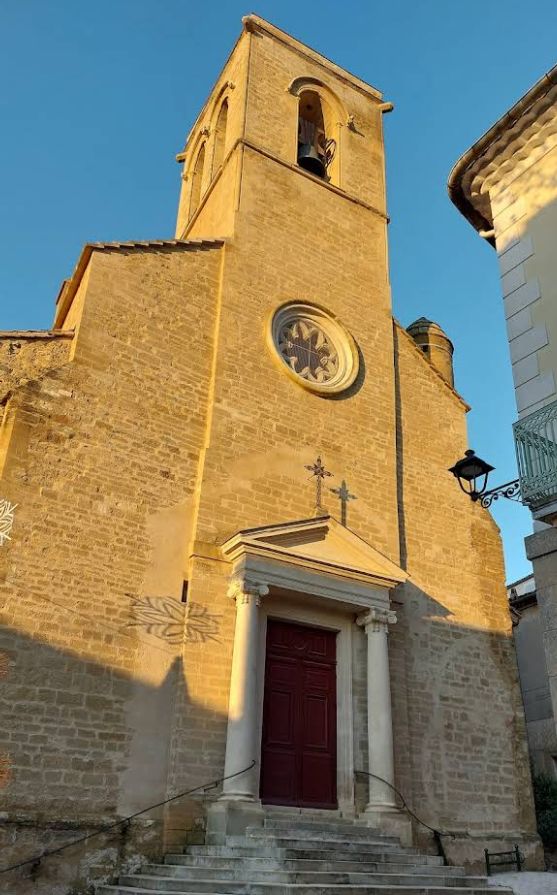
On the Sunday afternoon of August 1, 1683, at the Protestant Church in Courthézon, a small town in the Principality of Orange, 49-year-old Pierre FAURE and 19-year-old Justina POINTY wanted to be married. However, there was a problem. The priest was not willing to do it. The reason was that Pierre's first wife had been buried in the same church only six weeks earlier. The priest did not think that enough time had passed for Pierre to mourn.
What they did to change the priest's mind we do not know, but the marraige did take place.
Pierre FAURE, together with his brother Jean, made a living as merchants in and around Orange. Pierre's marriage did not bring the world to a standstill either. We have a record of a transaction that took place the very next day, August 2, 1683, near Courthézon. Pierre and Jean FAURE bought the fruit crop of the farmer Pierre Raynaud on this day. Indication that Pierre made a living as a merchant.
During this time, Politics and Religion played a major role in the everyday lives of people in Europe. For example, France, with a Catholic king, persecuted Protestants. In Orange, already part of the Protestant Netherlands since 1544, where about a third of the population was Protestant, life was much easier, and the inhabitants tolerated each other, regardless of their faith. Especially after April 1598, religious freedom was established in the Edict of Nantes, and Protestants were also tolerated in France. During October 1685, the Edict of Nantes was revoked, which made life difficult for Protestants again.
At this time, the French king, Louis XIV, had the area of Orange occupied by 500 soldiers under the command of the Count of Grignan.
At about the same time, on July 25, 1684, Pierre Faure and Justina's first child, a daughter Pernette, was born. Pernette was baptized on July 31, 1684, but unfortunately no other details are known to us.
On February 2, 1686, the birth of our ancestor Antoine followed. Antoine was not baptized until March 20, 1686. This happened in the Catholic church in Orange. Circumstances of the time closed most Protestant churches and baptism of children was allowed in Catholic churches. The witness at the event, and Antoine's foster father, was the captain of a slave ship, one Antoine Gragnon.
At the end of 1686, the brothers Pierre and Jean FAURE, together with their families, also left Orange and we pick up their trail again in Switzerland.
French refugees of the time, and we suspect the Faure family as well, sailed from Switzerland by boat up the Rhine River to the Dutch town of Zutphen, which was known as a point of welcome for the Huguenots. From there they continued on to various destinations.
In June 1687, Pierre was accepted as a member of the Protestant church in Borculo, Netherlands, and shortly afterwards Justine. The certificates of Pierre were transferred from the church in Lausanne and those of Justine from the church in Zurich. This makes us think that their stay in Switzerland was not without problems, but we also now know that Pierre and his family found a place to live.
Just outside Borculo was a large castle that was inhabited, at that time, by the family of Count Frederik Willem of Limburg-Stirum which also included his mother, Charlotte Elizabeth. The castle was located near the border between the Dutch province of Gelderland and Catholic Germany. Needless to say, it was not the best place to be.
Pierre did accept service as a guard at the castle and they lived on the grounds of the castle. The young Antoine in all likelihood had a Dutch school education and of course also learned the language.
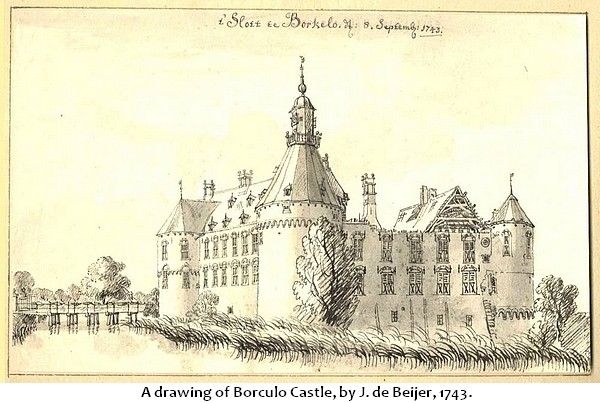
Unfortunately, we cannot paint a more complete picture of the Faure family while they lived in Borculo. The castle was destroyed in a fire and with it all the documents that would help us. The local church does have old documents that have survived, and from them we learn that Pierre and Justine had two more children.
In 1689 a son was baptized as Frederik Willem and in 1692 a daughter as Charlotte Elizabeth. We can guess that these children were named after the castle owner and employer of Pierre. These were difficult times and this is one way to show your gratitude to someone. The same goes for the daughter who was named after the mother of Count Frederik Willem. Unfortunately, there is no other reference to these two children.
Peace was declared between France and Germany with the Treaty of Rijswijk (September 1697). This also made life in Orange more bearable. Pierre and Justine, and the 12-year-old Antoine, returned to Orange, along with Pierre's brother Jean and his wife. No mention is made of the two younger children, which could mean that both died young.
On 16 August 1698, another son, Henri, was born to Pierre and Justine. He died on 1 September 1698. It is also around this time that we hear no more of Justine.
The King of Spain, Charles II, died in 1701. Louis XIV of France and William III of the Netherlands each had a different candidate in mind as successor. This led to renewed discord between France and the Netherlands and Orange was once again at the center.
Pierre Faure, now 65, decided to get away from it all. He moved to Switzerland and lived with his daughter Maria. He died there two years later.
The Count of Grignan again occupied Orange, this time more violently. Antoine, our ancestor, is now employed by his uncle Jean as a gunsmith. Circumstances were difficult with the king presenting them with a choice. They had to change their religion or leave the country. A deadline for their departure was set. Antoine, along with his uncle Jean, his wife and a granddaughter, decided to flee.
Families were not allowed to travel together. The men were allowed to follow a specific route. They had to leave France through Nice. They did this by following a route via Aix-en-Provence and Antibes. In Nice the British consul assisted them with funding. From there they crossed the Tenda Pass (1871m) to Turin in Italy. They reached their destination, Geneva in Switzerland, over the Mont Cenis Pass (2083m) in the Duchy of Savoy. The route took 22 days to complete, mainly on foot.
Most of the women and children chose to travel by boat to Lyon and from there to Geneva. There was a problem with payment for the boats which was fortunately solved by a wealthy Orange businessman, one Guillaume Denis.
The boat journey ended at Seyssel on the border of Savoy, about 60km from Geneva. This last leg was covered on foot. This route took about 29 days.
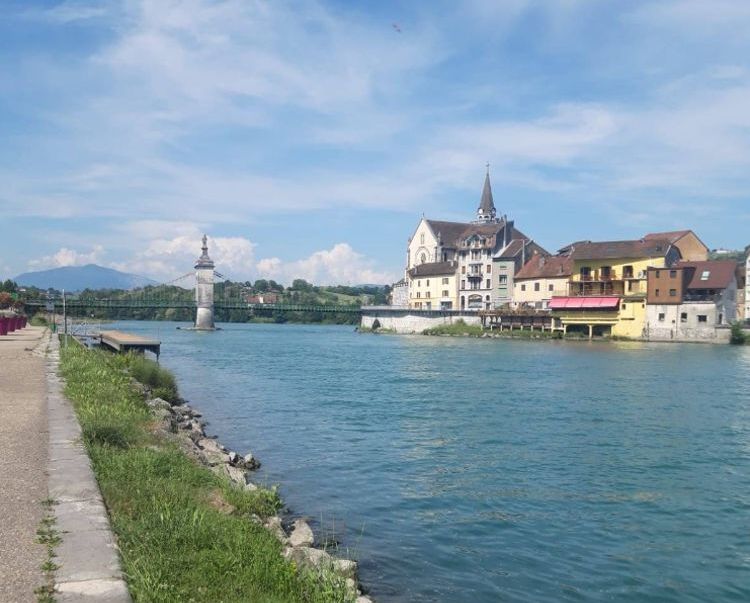
Due to a shortage of accommodation in Geneva, refugees were also scattered to several other towns. Jean Faure, Antoine's uncle, and his family found accommodation in Leipzig while Antoine continued to Schaffhausen where he arrived in September 1703. In February 1704, after the winter, the family regrouped and set off by boat on the Rhyn River to Basel and then north to Mainz. Between Basel and Mainz their boat came under fire from French troops under the command of Marshal Taillard who had just crossed the Rhyn River. Two refugees from Orange were wounded. In Mainz the group took another boat to Frankfurt where Antoine left his family.
Jean and his family sailed on to the Netherlands while the 18-year-old Antoine went with another group to Berlin. Here Antoine decided to qualify himself as a doctor. We know that on 17 September 1704 he was found suitable as an apprentice by a surgeon, on condition that he first obtain new clothes.
Germany had been at war with France since 1703, and by 1707 Antoine had also become involved. There were several French refugees serving in the German army. Antoine joined one such French regiment, commanded by Colonel de Varenne, himself a refugee from Metz, France.
By 1711, both sides were tired of war and peace negotiations were underway. Orange had already been occupied by France for some time. The Netherlands decided not to take any serious part in the negotiations. In 1713, with the Treaty of Utrecht, Orange was incorporated into France.
In 1713, our 27-year-old ancestor, Antoine FAURE, found himself in the Netherlands, namely in Bergen-op-Zoom.
Here we meet Alexander FAURE, also a refugee from Orange, who would play a major role in Antoine's life.
Why exactly the two met here we do not know. Perhaps it was a coincidence, or perhaps they knew each other, or perhaps they were even cousins? (see our introduction to Alexander in the story of our Family Coat of Arms) Did Antoine travel specifically to Bergen-op-Zoom to see Alexander? The most important thing is that their paths did cross here.
Alexander held an important position. He had already been the secretary of Prince Francois Egon de La Tour d'Auvergne, the Marquis of Bergen-op-Zoon, for some time. The Marquis was also a General in the Dutch army and fell in 1708. By 1713, Alexander was still in his position at the request of the heirs of the Marquis.
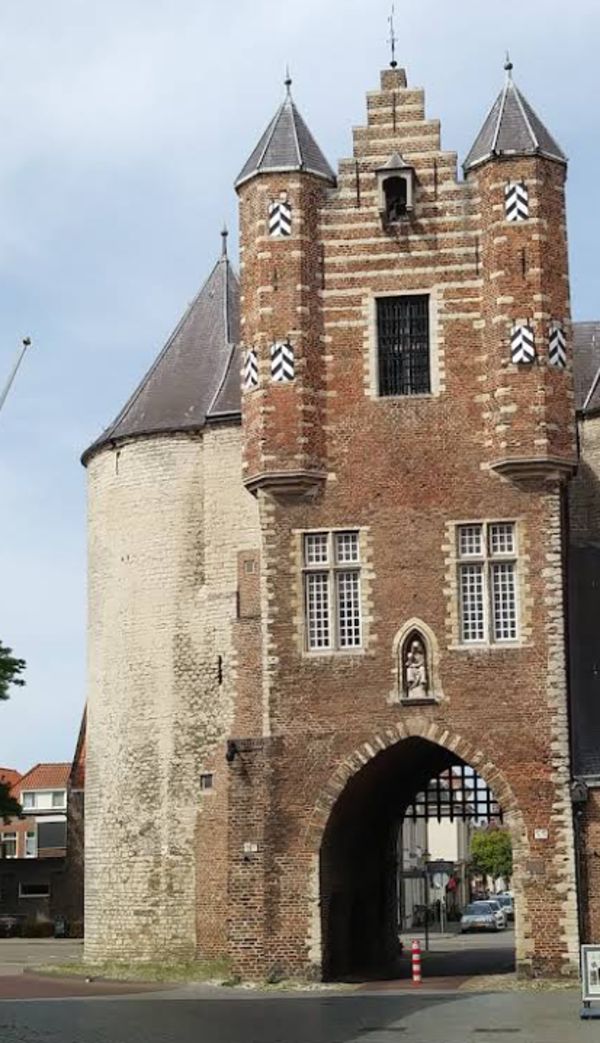
We also have record of Antoine and Alexander having to sign a legal document in June 1713 before a notary, one Van Samsbeeck. Alexander as the drafter of the document and Antoine as a witness.
Another important person we meet at Bergen-op-Zoon at this time is Maurice Pasques de Chavonnes, now the most senior officer of the garrison at Bergen-op-Zoom. He had just been appointed Governor of the Cape by the Dutch East India Company.
The last ship to arrive in Tessel from the east, past the Cape, also brought news of the poor conditions and diseases at the Cape. Chavonnes realised that he would have to take action and also pay attention to the functioning of the Orphanage which definitely needed attention. The ideal person he needed at the Orphanage had to have a caring and disciplined character and be able to communicate in Dutch, French and German - languages used at the Cape. Antoine was the right candidate.
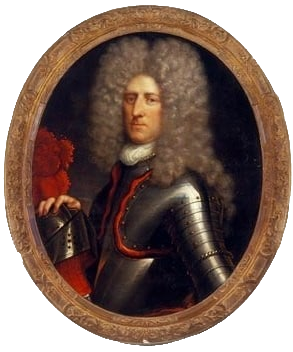
In October 1714 Antoine was employed by the Dutch East India Company with a 5-year contract. Whether Alexander was involved in the appointment, or whether he introduced Antoine to Chavonnes, we do not know, but suspect it may have been the case. We do know that Antoine and Chavonnes sailed together on the KOCKENEN, with Wouter Reiniersz as captain and a crew of 132, along with 39 soldiers and 14 other passengers, from Tessel on 30 November 1713.
After almost 4 months, the Kockengen arrived in Table Bay on 24 March 1714. Our ancestor, Antoine FAURE, is as far as is known the first person with the surname Faure to set foot here. In his luggage he also brought proof of his membership of the church in Orange, and on 25 June 1715 he was introduced as a member of the Dutch Reformed Church in Cape Town.
Antoine was employed by the Dutch East India Company (DEIC) as a clerk in the Orphan Chamber. The Orphan Chamber functioned like the one in the Netherlands and was involved in the keeping and Execution of Wills, and also acted on behalf of persons who were unable to take care of themselves and of course also orphans. At that stage there was not yet an Orphanage, as we know it now, in the Cape. Orphans were cared for by friends and/or family of deceased parents. The Orphan Chamber was concerned with the administration and execution of the money and interests of orphans.
After 18 months of service, on December 3, 1715, Antoine was promoted to 'Messenger' of the orphanage. As messenger, his duties included serving as a liaison between the Orphan Chamber and the outside world.
Although Antoine lived and worked in Cape Town - the DEIC also provided housing for workers - he also became acquainted with the French Huguenot community at Oliphantshoek (now Franschhoek) and Drakenstein. Here there were approximately 200 other French people who were provided with land by the DEIC and where they showed their value in a relatively short time in agriculture and especially viticulture. Antoine was also very warmly received by the families of the brothers Abraham, Jacques and Pierre de Villiers.
On 30 August 1716, the 30-year-old Antoine married the 22-year-old Rachel, daughter of Abraham de Villiers. They moved into a house in Tafel Valleij that Abraham had recently purchased from a certain Jan Hop. On 14 February 1717, Rachel was introduced as a member of the Dutch Reformed congregation in Cape Town. On 5 September 1717, their firstborn, a son, was born. He was baptized in the small congregation of Drakenstein by Rev. Petrus van Aken. Little Abraham was named after his grandfather, Abraham de Villiers.
During November 1717, Antoine wrote to his employer, the DEIC, requesting to be released from his 5-year contract. He stated that his salary was not sufficient to support his family. The request was granted in February 1718.
Stellenbosch. This is where the Faure family moved, but first a little background. By 1710 there was a small community, about 20 houses, a church and of course the Drostdy. On a hot day the Landros was sitting in his garden, and in an attempt to light his pipe with a coal fire, the unexpected happened. The fire that followed engulfed the church, Drosdy and most of the houses. Needless to say, the official investigation could not determine the cause. One of the resulting problems was that a suitable venue for Church services had to be found. A wealthy farmer, one Jan Botma (some sources refer to Botha) offered his wine cellar as a temporary solution, but only after the grape harvest had been processed. Services were held there from June 1711. Shortly after this, Jan Botma sold his vineyard to his neighbor.
The cellar, in the middle of the town, was not the ideal solution for the congregation and in 1715 plans were made to build a new church on the site of the old church.
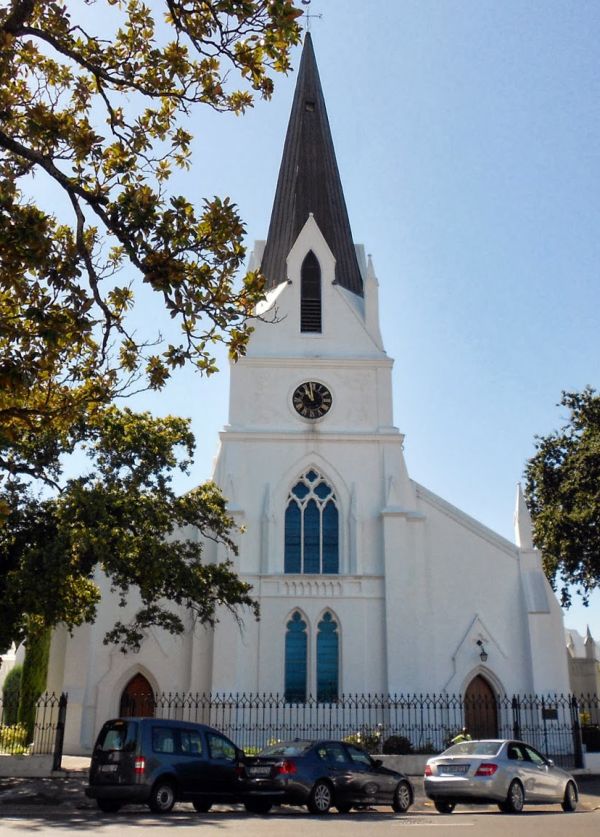
We do not know where in Stellenbosch Antoine and his family initially lived. We do have a record that he was proposed as a deacon in the Stellenbosch congregation on 12 February 1719.
At this time the Church Council also began to look for a suitable candidate to replace the reader, Jacques Mathieu, because he could no longer fulfill all his duties. Reverend Beck proposed Antoine to the Church Council as a candidate. Antoine was then invited for a trial on 19 May 1719. The Church Council was impressed with Antoine's reading and singing and unanimously decided to appoint him. At that time the Governor's permission was still needed (the DEIC paid the salaries of the congregation staff) and Reverend Beck made the necessary submission, after which Antoine was appointed as reader and also as schoolmaster.
However, there was a problem. Jacques Mathieu still lived in the house that was attached to the post. In terms of a previous set of rules, the Magistrate gave the house to Jacques. The Church Council now had to find another home for the new reader, Antoine Faure.
We also learn from old records that various events affected Antoine's life during this time. Sometime in 1719, Jan Botma died. Still in 1719, and on 7 September, a second son was born to Antoine and Rachel. He was baptized in Stellenbosch as Jean Pierre. Antoine's father and uncle were probably named.
We see in Church archives that the church made an offer of 600 guilders to the widow of Jan Botma, Stijntje Christoffelse de Bruin, for the wine cellar that still served as a temporary church building. She accepted the offer. There is also a note that the council considered converting the cellar into a dwelling house for Antoine.
On 31 March 1720, Abraham de Villiers, Rachel's father, died. He left 600 guilders (florins) to Rachel. His widow, Suzanna, remarried on 13 October 1721.
A daughter was born to Antoine and Rachel on 11 May 1722. She was baptized in Stellenbosch as Suzanna Justina, presumably after both Rachel's and Antoine's mothers.
The Stellenbosch DR congregation, now almost 60 members strong, built the new church building with a loan from the DEIC. By 1722 it was consecrated but without an attic, floor, organ or consistory.
Antoine, as we know, was still paid by the DEIC. On 20 December 1722 his salary was increased to 16 guilders per month. This must have been a great moment that could have made life easier for the Faure family.
On 30 December 1722 Antoine bought the house of Jan Botma from his widow. The purchase price was 2000 guilders of which 500 was paid in cash (probably from Rachel's inheritance). The balance of 1500 guilders was covered by a letter of intent ('kustingsbrief') to the widow.
During April 1724, Jan Botma's widow died. The estate included a letter of intent by Antoine which now suddenly had to be paid. Because it was a problem for him, the Church Council bought the house for the full value of 2000 guilders. This was a good solution to the problem, but the church did not have the funds immediately available. The amount was finally paid in 1727.
Antoine and Rachel welcomed another son on 1 October 1724. He was baptized in Stellenbosch as Christianus.
The five-year term of Antoine's deaconship expired in 1724. Dirk Uijsch was appointed in his place.
In the period from 1726 to 1732 there was a shortage of ministers, or sometimes suitable ministers, in the three congregations of Cape Town, Stellenbosch and Drakenstein. On the occasions when no minister was available to act in Stellenbosch, the task was assigned to Antoine. This kept him well occupied and according to the record he fulfilled his task well.
Another son, named Jacobus, probably after Rachel's uncle Jacques, was baptized in Stellenbosch on 27 April 1727.
In the meantime the Church Council decided to sell the wine cellar (or 'press houses' as it was recorded). It was sold on 7 July 1729 for 250 guilders.
Rachel's mother, Suzanne, also died in 1729 and the remainder of Abraham de Villiers' estate was paid out to his children. Antoine and Rachel received 1369.21 guilders.
Still in 1729, Rachel gave birth to another son. He was baptized as Johan Christoffel on 26 December. Unfortunately, he died shortly afterwards. In 1733, a second daughter, Maria, was born. She was baptized on 1 February but died two years later.
On 25 July 1736, Antoine died at the age of 51. He was buried on the church grounds, in grave 41. Unfortunately, church records have not been preserved and we do not know which grave this is.
On 7 August 1736, the DEIC appointed Antoine's son Abraham as reader and schoolmaster in his place. The salary was still 16 guilders per month and he still had the use of the house. The congregation then also made another house, with a garden, available to Rachel. This house was officially transferred to her in 1753.
There is no official family coat of arms registered that we can call "our own".
A family coat of arms, or shield, is granted to an individual, and only his direct descendants have the hereditary right to use it, and not all persons bearing the same surname.
The coat of arms shown here is the coat of arms brought to South Africa by Antoine FAURE. It officially fell into disuse after two generations when there were no further direct male descendants.
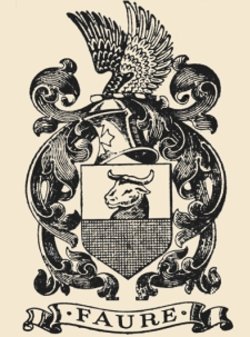
There is a twist in the story of this family crest. Dr Abraham Faure (1795 - 1875) thoroughly documented the well-known FAURE family of the time. He also mentions a visit to the Cape and to him personally, by one Pieter Huibert FAURE, a direct descendant of Alexander FAURE (1671-1741). The interesting thing was that Pieter Huibert FAURE's family used the same family crest, with the bull motif.
Now the question. Was Alexander FAURE (1671-1741) who helped our ancestor in Bergen op Zoom, the Netherlands, his cousin? Was it this family bond that brought them together? Or was their meeting just a coincidence?
We do not know, and unfortunately we never will. Personally, I like the idea that they were indeed cousins, and that their meeting was not a coincidence.
Many sources we have reviewed show our ancestor's first name as Antoine only. Then there are also the confusing sources that give his first names as Antoine Alexander, especially persons who recorded our family history locally.
If you have read the story of our ancestor, you would also have come across the name of Alexander Faure (1671-1741) as a person of whom we could not confirm any family relationship, but suspect that he was a cousin of Antoine. The story of our family coat of arms also refers to the family of Alexander Faure.
A closer examination of the entry of Antoine's birth on the pages of the Quatro Bible brought to South Africa by Antoine, shows that the entry does indeed show the names Antoine Alexander. However, the name Alexander is clearly in a different handwriting, and probably inscribed later. We know that the Bible was donated to the Stellenbosch Theological School by Dr Abraham Faure. We also know that he had contact with Pieter Huibert Faure, a direct descendant of Alexander Faure, as mentioned in the story of the Family Coat of Arms.
Did Dr. Abraham put Alexander's name in the Bible? We don't know. We can only speculate about the reasons for putting Alexander's name in the Bible.
What we do know is that Antoine's baptismal name was recorded as only Antoine, and that all entries of his name in the records of the DEIC are only Antoine, and not Antoine Alexander.
Our information is confirmed by this entry from the baptismal register of Antoine from the archives of the Catholic church of Orange.
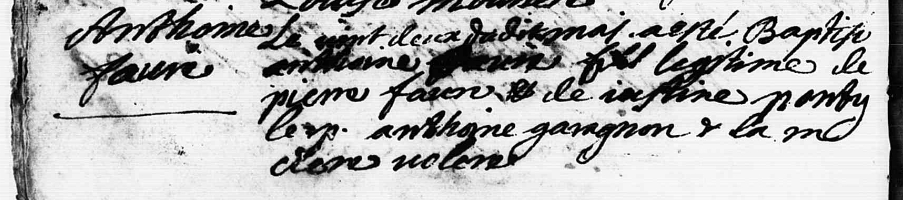
Until other information becomes known, we will know him as Antoine Faure.
Below is a timeline of some historical events that directly or indirectly influenced the arrival of the Faure family to South Africa. Important events in the lives of Antoine and his family also appear here.
© faure.co.za 2018 -
